
How to Measure AI SEO Performance in 5 Steps
Master AI SEO analytics with our comprehensive 5-step guide. Discover how to track your brand’s visibility across generative search engines and AI-powered platforms, measure the true ROI of your AI SEO efforts, and monitor the most important performance indicators. Learn how to analyze AI-driven search trends, evaluate traffic quality, and optimize your strategy using key AI SEO KPIs to improve rankings, engagement, and business growth.
Step 1: Audit Your Current AI Search Visibility
Strong ai seo analytics starts before you touch a single dashboard — it starts with understanding how AI models describe your brand right now. This audit gives you a repeatable baseline to measure against as you optimize.
Use these steps to run a structured visibility audit across the major AI platforms:
- Open ChatGPT, Gemini, and Perplexity in separate browser tabs so you can compare responses side by side without one influencing the other.
- Enter category-specific prompts that reflect real buyer intent — for example, “best luxury hotels in Dubai,” “top interior design firms in the UAE,” or “recommended digital marketing agencies in Dubai” — and record exactly where, or whether, your brand appears.
- Document sentiment and accuracy by noting how each model describes your services: is the language positive, neutral, or outdated? Flag any factual errors in your brand description immediately, as these directly damage credibility.
- Measure your Share of Model — as marketing consultant Jes Scholz puts it, this [new SEO KPI](https://fatjoe.com/blog/ai-seo-kpis/) tracks “how often your brand is mentioned by an LLM relative to your competitors.” Count competitor mentions in the same prompts to establish a ratio.
- Log every result in a tracking spreadsheet, including the exact prompt, platform, brand position, sentiment score, and date — consistency here makes trend analysis possible later.
- Repeat the audit across at least five distinct query types, covering informational, comparative, and transactional intent, to avoid drawing conclusions from a single data point.
This baseline snapshot — who the AI knows you are, and how confidently it recommends you — is the foundation every subsequent measurement step depends on. If you’re building a broader search visibility strategy in Dubai, this audit should run before any other optimization work begins. Next, you’ll learn how to track exactly how often AI systems are actively citing your brand in live search results.
Step 2: Track Citation Frequency in AI Overviews
Now that you’ve audited how AI models describe your brand, the next priority is measuring how often your URLs appear as cited sources inside Google’s AI Overviews. This is central to measuring generative engine optimization performance — because as Search Engine Journal notes, AI Overviews often prioritize cited sources over the first organic result, fundamentally shifting click-through patterns.
Complete this process in order:
- Open Google Search Console and navigate to the Search Results report. Filter by queries that trigger AI Overviews — look for high-intent, informational keywords where Google typically generates a summary panel.
- Segment keywords into two buckets: informational citations (where AI summarizes your content) and transactional recommendations (where AI suggests your product or service). These require different optimization strategies.
- Install a specialized AI tracker such as a rank-monitoring tool with AIO detection to log which URLs Google pulls as foundational sources.
- Record citation frequency weekly using the table below as your tracking framework.
Metric | Tool | Purpose |
AIO keyword triggers | Google Search Console | Identify queries generating AI Overviews |
URL citation count | AI rank tracker | Measure how often your pages are sourced |
Informational vs. transactional split | Manual review | Prioritize content gaps |
Key insight: A page ranking #4 organically can generate more qualified traffic than a #1 result if it earns an AIO citation — making citation tracking non-negotiable.
With citation frequency benchmarked, the logical next step is understanding whether those citations are actually sending visitors to your site — which is exactly what referral traffic analysis reveals.
CONTACT US TODAY!
Get a Free Growth Plan Today!

Once these segments are live, you have the raw data needed to assign real dollar values to your AI visibility — which is exactly what the next step covers.
Step 3: Analyze Referral Traffic from Generative Engines
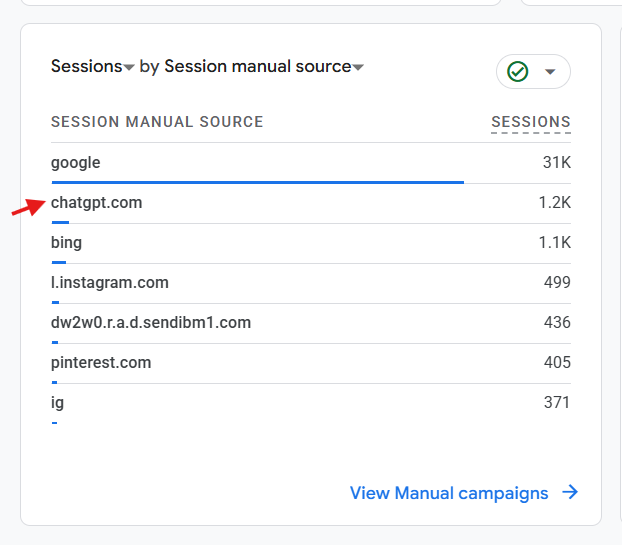
With citation frequency tracked, the next priority is configuring GA4 to measure the actual traffic those citations send — and whether that traffic converts. This is where ai search engine optimization roi becomes measurable rather than theoretical. Studies show AI Overviews can drive an 18–64% reduction in organic traffic for informational keywords, making it critical to isolate what AI platforms are sending you before drawing conclusions.
“AI referral sessions consistently show higher intent signals — longer dwell times, lower bounce rates — compared to traditional organic visits, suggesting users arrive further along the decision journey.” — nav43.com
- Open GA4 and navigate to Explore → Blank Exploration to build a custom segment.
- Create a segment filtering sessions where Session source contains chatgpt.com, gemini.google.com, or perplexity.ai.
- Compare that segment against your standard organic segment, measuring conversion rate, session duration, and pages per session.
- Monitor zero-click trends by cross-referencing GA4 traffic dips against rising brand mention volumes — a drop in clicks alongside increased mentions signals AI is answering queries without a referral.
- Evaluate lead quality by tagging AI referral sessions with a UTM parameter whenever a chatbot-sourced link is available, then reviewing downstream CRM data for deal value.
- Export monthly snapshots to a comparison sheet so you can track whether AI referral share is growing relative to total sessions over time.
Step 4: Calculate AI SEO ROI for UAE Hospitality
With citation frequency and referral traffic now measured, the critical next step is converting those numbers into business value — particularly for UAE luxury hospitality brands competing for high-intent travelers.
Knowing how to track ChatGPT search visibility means little without a revenue framework behind it. According to Gartner, 40% of adult US users are already using AI tools for search-related tasks — a pattern accelerating rapidly in the UAE market. Here’s how to build a concrete ROI model:
- Assign a PPC equivalent value to each AI citation by identifying the CPC of the keyword that triggered it. If a cited URL targets a $12 keyword and earns 200 AI-driven sessions monthly, that citation carries roughly $2,400 in equivalent paid traffic value.
- Enable Assisted Conversion tracking in GA4 to capture journeys where an AI touchpoint appeared before a booking confirmation — isolating AI’s influence from direct or organic channels.
- Monitor branded search volume in Google Search Console using UAE-segmented data. A rise in direct brand queries after increased AI citations signals growing offline-to-online authority — a key hospitality KPI tracked via citation-to-conversion modeling.
- Audit LLM dataset presence by querying ChatGPT, Gemini, and Perplexity monthly for your property category. Track whether brand mentions grow, stabilize, or decline across niche hospitality prompts.
- Report on four hospitality-specific KPIs each quarter: AI-attributed room nights booked, cost-per-AI-assisted-lead vs. paid search, brand mention sentiment in generative responses, and citation share vs. competitive set.
- Document baseline metrics now using a structured AI search readiness audit so future ROI comparisons have a reliable reference point.
Once these ROI signals are consistently captured, you’re ready to consolidate them into a performance narrative — which is exactly what the final step covers.
3. Local Authority and Regional UAE Expertise
How to Summarize Your AI SEO Success
Distilling your measurement work into a stakeholder-ready summary means shifting from legacy metrics to the signals that actually reflect AI visibility. Use the following process to wrap up your ai seo kpis for hospitality industry reporting cycle cleanly.
- Replace rank tracking with Share of Model — calculate what percentage of relevant AI-generated responses mention your property versus competitors, using the citation logs you’ve built across Steps 1–3.
- Filter for high-intent conversions — strip informational traffic from your GA4 reports and focus exclusively on sessions that result in bookings, inquiries, or direct revenue events.
- Run a monthly LLM response audit using the checklist framework outlined in the AI Search Readiness Checklist to catch outdated or inaccurate brand descriptions before they mislead guests.
- Apply Geo Optimization continuously — [Senvora Digital](https://senvoradigital.ae/seo-for-interior-designers-dubai/) specializes in AI-driven Geo Optimization that ensures local context stays accurate inside ChatGPT and Gemini responses for UAE markets.
In practice, the properties that sustain AI visibility are those that treat measurement as an ongoing loop rather than a quarterly audit. Prioritize citation quality, conversion depth, and local accuracy — and your AI SEO performance will compound over time.
Senvora Digital helps businesses improve their visibility across AI-powered search platforms and generative search engines. By combining advanced AI SEO strategies, content optimization, and technical expertise, Senvora Digital ensures brands stay discoverable, competitive, and future-ready in the evolving search landscape.